

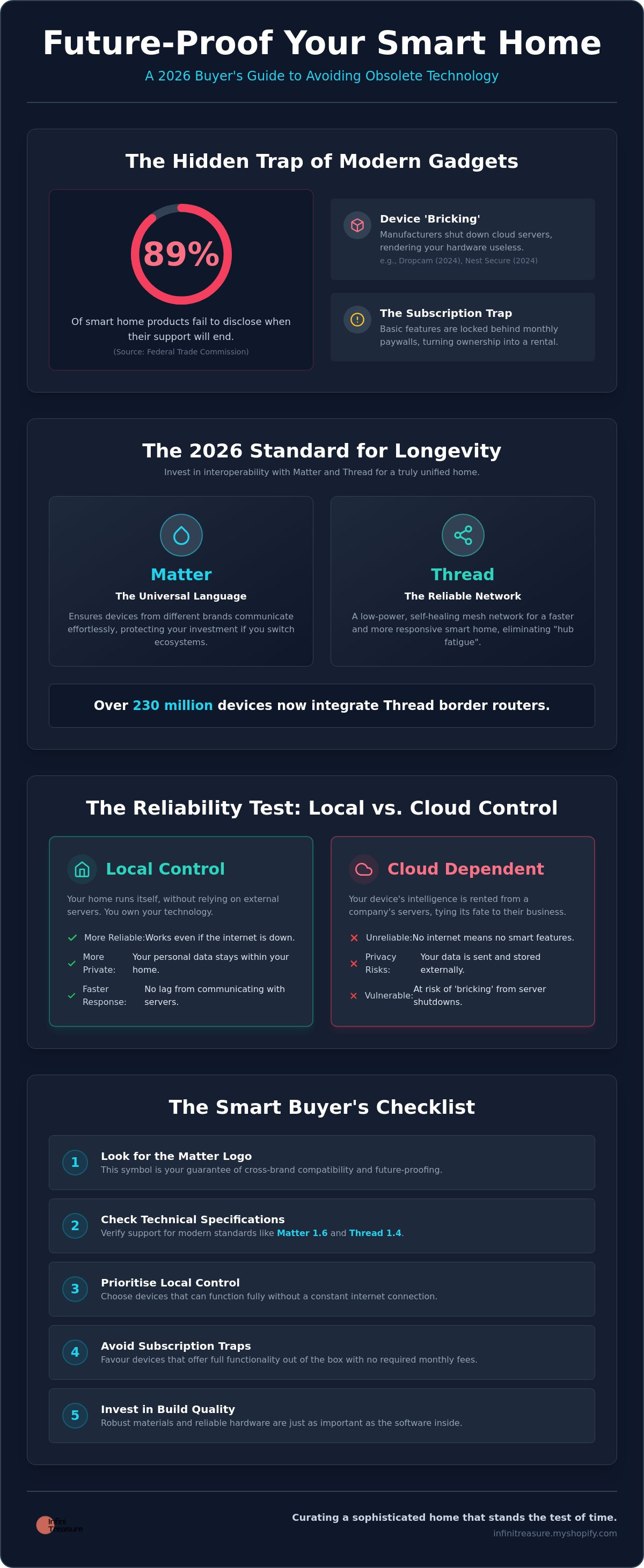
Did you know that 89% of smart home products fail to tell you when they will stop supporting your device? It is a startling figure from the Federal Trade Commission that highlights why so many of us feel hesitant about upgrading our living spaces. You want a home that feels effortless and modern, not a collection of expensive paperweights. To truly future-proof your space, you must learn how to avoid buying outdated smart home gadgets that rely on disappearing cloud services or closed systems.
We understand the frustration of juggling dozens of apps and worrying if your new hub will be obsolete by next summer. You deserve the peace of mind that comes with a reliable, well-curated home. This guide will help you identify the latest standards, such as Matter 1.6 and Thread 1.4, so your devices finally talk to each other regardless of the brand. We are diving into the secrets of local control and open protocols to ensure your investment stands the test of time and keeps your daily routine running smoothly.
Key Takeaways
- Learn how to identify Matter and Thread compatibility to ensure your devices communicate effortlessly across different brands.
- Discover the simple red flags that help you avoid buying outdated smart home gadgets that might become obsolete within months.
- Understand the importance of local control for a more reliable, private, and responsive home that doesn't rely on external servers.
- Gain the confidence to invest in high-quality electronics that enhance your lifestyle whilst offering genuine long-term value.
- Explore how a curated approach to technology can transform your space into a sophisticated and future-proof sanctuary.
The Hidden Trap: Why Modern Smart Home Gadgets Become Obsolete
The allure of a sleek, voice-controlled home is undeniable. We often find ourselves drawn to the latest shiny object, seduced by polished marketing and the promise of a more organised life. However, the smart home market in 2026 is more volatile than ever before. Rapid shifts in technology mean that yesterday's breakthrough is tomorrow's e-waste. To truly avoid buying outdated smart home gadgets, you must look beyond the aesthetic and understand the digital foundation of your devices. A stylish exterior means very little if the software inside has an expiration date.
One of the most frustrating realities for modern homeowners is bricking. This occurs when a manufacturer decides to shut down its servers, turning your functional hardware into a useless plastic shell. We saw this clearly in April 2024 when support for Dropcam and Nest Secure ended. This was followed by early generations of Nest Learning Thermostats in April 2025. When a device relies entirely on a proprietary cloud, its lifespan is tied to the company's balance sheet rather than the quality of the product itself. Choosing devices built on the Matter smart home standard helps break this cycle. It ensures gadgets can talk to each other locally, without needing a specific company's server to stay alive.
The Subscription Trap: When Hardware Requires a Monthly Fee
Many brands have transitioned to a Hardware-as-a-Service model. You buy the physical device, but basic features like video history or simple automation are hidden behind a paywall. If you stop paying, your smart gadget loses its intelligence. Savvy buyers now prioritise no-subscription models. These devices offer full functionality out of the box. This ensures your home remains smart without an endless list of monthly direct debits. It is about owning your technology, not renting your convenience.
The E-Waste Crisis in Smart Tech
Short-lived electronics carry a heavy environmental and financial price. It is not just about the software. Poorly made plastic hinges or low-grade sensors often fail long before the digital components do. At Infini Treasure, we act as your curator. We select high-quality tech accessories for daily life that balance style with genuine longevity. By choosing hardware with local control and robust build quality, you protect your investment and reduce your footprint. It is the smarter way to build a lasting, sophisticated home that stands the test of time.
Future-Proofing with Matter and Thread: The 2026 Standard
Matter has finally ended the era of "ecosystem wars". In 2026, it serves as the universal language that allows your favourite gadgets to communicate, regardless of the brand. If you want to avoid buying outdated smart home gadgets, look for the Matter logo on every box. This standard ensures that a light bulb from one manufacturer works perfectly with a hub from another. It is the foundation of a sophisticated, unified home that prioritises your lifestyle over brand loyalty.
Thread is the other half of this future-proof equation. Unlike traditional Wi-Fi, Thread is a low-power mesh network protocol designed specifically for smart devices. It is fast, reliable, and self-healing. As of early 2026, Thread border routers are integrated into an estimated 230 million devices, including Apple HomePods and Google Nest hubs. Choosing Thread-enabled devices eliminates "Hub Fatigue" because you no longer need a separate proprietary bridge for every new addition. To verify a purchase, follow this simple check:
- Look for the Matter "M" logo on the packaging or product description.
- Check the technical specifications for Matter 1.6 and Thread 1.4 support.
- Verify if the device supports NFC-based commissioning for easier setup.
Why Matter-Compatible Devices Last Longer
Interoperability is the ultimate form of peace of mind. Your investment is protected even if you decide to switch your primary phone or smart speaker. Matter devices also prioritise local control. This means they perform basic tasks within your own four walls without needing a constant internet connection. According to the NIST smart home security report, consumer trust is deeply tied to how these devices handle data and connectivity. By keeping commands local, you gain speed and privacy. Building a collection of smart home essentials uk ensures your ecosystem remains cohesive and ready for the future.
Legacy Devices: When to Keep and When to Bin
Many homeowners worry about their older Zigbee or Z-Wave kits. Whilst these aren't useless, they do require a bridge to talk to your Matter network. In 2026, we have reached a clear cut-off point. Older technologies that lack a bridge-to-Matter path are effectively dead. If a device relies on Thread 1.3 or older protocols that are no longer being certified, it is time to gracefully retire it. Replacing these with modern alternatives keeps your home secure and responsive. You can find replacements that meet the latest 2026 standards amongst our curated electronics.
Cloud-Dependent vs. Local Control: The Reliability Test
Imagine walking into your lounge and asking for the lights to dim. If that simple command has to travel to a server in another country before your bulb reacts, you are experiencing "cloud lag". It's a frustrating delay that makes a sophisticated home feel clumsy rather than effortless. To truly avoid buying outdated smart home gadgets, you must prioritise local control. This ensures your commands stay within your own four walls, resulting in near-instant responses and far greater reliability.
Local processing isn't just about speed; it is a fundamental pillar of privacy. When your devices process data locally, your domestic habits, wake-up times, and security footage aren't constantly being uploaded to a manufacturer's database. It keeps your private life private. Identifying these "local-first" gadgets is easier than you might think. Look for devices that function without a mandatory account or those that carry the Matter logo, as these are designed to work across your home network even if your external internet connection drops.
The Vulnerability of Proprietary Clouds
The "Insteon lesson" remains a cautionary tale for every tech enthusiast. When the company abruptly shut down its servers, thousands of users were left with expensive, non-functional hardware. This is the danger of proprietary clouds. If a brand is acquired or goes bankrupt, your cloud-dependent gadgets can become e-waste overnight. Choosing devices that support Matter or Apple HomeKit usually implies better local reliability. We focus on these standards at our smart home electronics online shop, ensuring our customers maintain autonomy over their own technology.
Offline Functionality: The "Internet Down" Test
A resilient home should remain smart even during a broadband outage. Before you click buy, ask yourself: can I still turn on my lights if the Wi-Fi fails? For essential systems like smart locks and thermostats, physical or local overrides are non-negotiable. You don't want to be locked out of your house or stuck in a cold room because of a provider fault. Designing for resilience means choosing hardware that uses mesh protocols like Thread to maintain a local web of connectivity. This ensures your home continues to run smoothly and automatically, regardless of what's happening with the wider web. It's about building a space that serves you, not the manufacturer's server.
The Smart Buyer’s Red Flag Checklist for 2026
Spotting a bargain is easy, but identifying a device on the brink of obsolescence requires a more discerning eye. To avoid buying outdated smart home gadgets, you need a framework that goes beyond the price tag. If a product fails to mention Matter or Thread support in its technical specifications, it is likely built on yesterday's technology. As we discussed earlier, these protocols are the new universal standard. Buying without them is like purchasing a television that doesn't support high definition; it might work today, but it won't fit into your future setup.
Beware of any device that requires a specific, proprietary bridge to function. These "black boxes" clutter your router and create a single point of failure. If the company disappears, so does your home's intelligence. Additionally, check the app's history in the App Store or Play Store. If it hasn't seen an update in over six months, the manufacturer has likely moved on, leaving your security and functionality at risk. Look for these warning signs before you commit:
- No mention of Matter 1.6 or Thread 1.4 compatibility on the spec sheet.
- Mandatory proprietary hubs or bridges required for basic operation.
- A manufacturer history of "bricking" products or ending support within three years.
- Non-standard, non-replaceable internal batteries that render the unit disposable.
- Stale software with no recent security patches or bug fixes.
Evaluating Firmware Support History
A brand's "End of Life" policy is just as important as the gadget's features. A 2024 Federal Trade Commission investigation found that 89% of smart home products fail to provide information about when support will end. Reliable manufacturers are transparent about this timeline. Regular security patches are far more important than flashy new features, as they protect your home network from vulnerabilities. This is why we act as a savvy curator at Infini Treasure. We vet every item for quality and long-term viability, so you don't have to spend hours researching corporate policies. You can browse our carefully selected electronics with total peace of mind.
Battery and Power Sustainability
Sustainability is a hallmark of a modern, sophisticated home. Avoid gadgets with built-in batteries that cannot be replaced. When the chemical life of the battery ends, the entire device becomes e-waste. Instead, look for energy saving smart home devices that utilise ultra-low power Thread protocols. These often run for years on standard cells or offer easy USB-C charging. In 2026, USB-C is the non-negotiable standard for portable tech. It ensures you can charge everything with a single, high-quality cable, keeping your space organised and clutter-free.
Curating a Sophisticated Home with Infini Treasure
Creating a modern living space should be an inspiring journey, not a source of technical anxiety. At Infini Treasure, we believe that your home should run as a seamless extension of your personality. Our role is to act as your expert guide, helping you to avoid buying outdated smart home gadgets that clutter your drawers and complicate your life. We meticulously select electronics that balance contemporary aesthetics with the technological endurance we have discussed throughout this guide. It is about finding that perfect harmony between modern efficiency and personal well-being.
Shopping for technology can feel overwhelming, especially with the rapid pace of change in the UK market. We simplify this by sourcing only the highest quality items that meet our strict standards for durability and style. Whether you are looking for car accessories or sophisticated electronics, our 30-day refund policy serves as your ultimate safety net. This policy allows you to integrate new tools into your routine with absolute confidence; your satisfaction and peace of mind are always our primary priorities.
A well-chosen gadget does more than just perform a task; it transforms your environment. By moving away from fragmented, cloud-dependent systems, you can create an organised, productivity-focused home that supports your ambitions. We help you transition from a cluttered house to a streamlined sanctuary where every device serves a clear, lasting purpose. It is a more stylish and vital way of living that is easily within your reach.
The Infini Treasure Difference: Style Meets Smart
We focus on products that enhance your daily routine without adding unnecessary complexity. Our "Quality First" curation process filters out the e-waste and focuses on items with robust firmware support and local control. We understand the specific nuances of the UK smart home landscape, ensuring our gadgets fit perfectly into your life. To make your journey even smoother, we offer free shipping on all orders over £50. This ensures your next home upgrade is both practical and rewarding.
Your Next Steps to a Future-Proof Home
Building a resilient home starts with a few intentional choices. Begin by auditing your current setup to identify any at-risk devices that lack Matter or Thread support. Once you have identified the gaps, start small by choosing one ecosystem and sticking to Matter-certified devices for guaranteed interoperability. This methodical approach ensures your investment stands the test of time. Explore our latest collection of smart home electronics today and take the first step toward a space that is as intelligent as it is beautiful.
Step Into a Seamless Future
Your home should be a sanctuary of ease, not a collection of digital frustrations. By prioritising Matter-certified devices and local control, you ensure that your technology serves you for years to come. It is entirely possible to avoid buying outdated smart home gadgets when you have the right framework and a trusted partner by your side. Focus on those essential 2026 standards like Thread 1.4 to keep your ecosystem fast, private, and resilient whilst maintaining a sophisticated aesthetic.
We are here to help you navigate these choices with absolute clarity. Our curated collection focuses on gadgets that combine modern style with genuine longevity. Upgrade your space with our curated Smart Home Collection today and enjoy the peace of mind that comes with our 30-day full refund policy. With free shipping on orders over £50 and dedicated British English customer support, your journey toward a more organised life is safer than ever. Embrace the convenience of a truly modern home; your future-proof space is just a few clicks away.
Frequently Asked Questions
What is the Matter protocol and why does it matter in 2026?
Matter is the universal communication language that allows smart devices from different manufacturers to work together seamlessly. In 2026, it's the essential standard for any sophisticated home because it eliminates the frustration of using multiple apps and proprietary hubs. By choosing Matter-certified products, you ensure your gadgets remain compatible with major platforms like Apple Home and Google Home. This creates a more organised and reliable environment that prioritises your comfort over brand restrictions.
Can I still use my old smart home devices with new Matter-certified hubs?
Most legacy devices can still function within a modern setup if you use a compatible bridge or gateway. Many brands have updated their existing hubs to act as Matter controllers, allowing older Zigbee or Z-Wave tech to join the new network. However, very old hardware that lacks a clear bridge-to-Matter path may eventually lose functionality. Checking for these compatibility bridges is a vital step to avoid buying outdated smart home gadgets that cannot grow with your space.
How can I tell if a smart gadget is cloud-dependent or locally controlled?
You can identify local-first gadgets by looking for the Matter logo or mentions of "Local Control" in the technical specifications. A device is typically cloud-dependent if it requires a mandatory account and a constant internet connection to perform even the simplest tasks. Locally controlled devices process your commands within your own four walls, which offers near-instant response times and superior privacy. This ensures your home remains smart even if your external broadband connection fails.
Is it worth buying smart home gadgets from unknown brands on sale?
Investing in bargain tech from unknown sources is rarely a wise long-term strategy for a stylish home. These devices often lack the robust firmware support and security patches provided by established manufacturers. If the company goes bankrupt or shuts down its servers, your "bargain" could become a non-functional piece of e-waste overnight. It's much safer to trust a curated shop that vets for quality and longevity, ensuring your daily routine isn't interrupted by sudden software failures.
What should I do if a company stops supporting my smart home device?
Your options depend on whether the hardware supports local control or open-source alternatives. If the device is locally controlled, it may continue to perform basic tasks, though it will no longer receive vital security updates. For entirely cloud-dependent devices, the hardware usually becomes useless once the manufacturer ends support. In these cases, the best approach is to recycle the unit responsibly and replace it with a Matter-certified alternative that offers a more transparent support timeline.
Are there any smart home categories that are particularly prone to obsolescence?
Security cameras and proprietary hubs are the most frequent victims of rapid obsolescence. These categories rely heavily on manufacturer-specific servers for features like video storage and automated routines. To avoid buying outdated smart home gadgets in these areas, prioritise cameras that offer local SD card storage and support the latest Matter 1.6 standards. This ensures your security system remains responsive and private without being tied to a manufacturer's potentially short-lived cloud service.